NERVE4 Action – Network establishment for V4 wetland forest protection
Wetland forests and nearby habitats represent only a small fraction of the Earth’s total land area. Nevertheless, these areas have been described as the lifelines of the landscape, providing services of global importance and so deserving disproportionate attention in the near future as key environmental resources. Much more worrying is that, in recent years, there has been a more than 50% loss of wetland areas globally, with even greater losses (ca 80%) in Europe and North America. These losses are associated with massive deforestation, drainage, and climate changes leading to severe forest degradation. It is known that wetland forests and aquatic systems interact in a complex manner and together have been identified as essential elements in mitigating climate change. Thus, a call to action for the preservation of forests, of water and so of climate, is emerging on many fronts as key to human survival. Such work stands among the top priorities in suitable development goals, as defined in The Agenda 2030 (United Nations, 2015). In this context, NERVE4 Action will ensure the harmonization of recommendations for European wetland forest protection. As such, improved biodiversity management will facilitate delivery of Aichi targets for Restoration (2010), Madrid Resolution MCPFE (2015), the EU Biodiversity Strategy 2020 and outcome of Agenda 2030.
The overall aim of the NERVE4 Action is to create an international working network for the conversion of knowledge on biodiversity loss, restoration, and sustainability in European wetland forests among scientists and stakeholders, and to raise awareness of wetland forest protection within and outside the V4 region. We want to establish the long-standing biodiversity and environmental monitoring network of the most representative wetland forests of V4 to prepare evidence-based guidance to practical nature conservation. This monitoring will help to identify main gaps and find solutions on how to protect European wetland forests. The benefits and obstacles of wetland forest protection will be described in the wetland protection brochure and educational video. It will allow to produce guidance and recommendations on how managed woodland systems enhance the biodiversity of woodlands in particular, and thus the functioning of the wider ecosystems of which they are a part. The project will facilitate wetland ecosystems enhancing biodiversity in European wetlands via specific methodologies applicable in practice. We will use unique possibilities to compare four regions with different climatic conditions to predict biodiversity response driven by climate change. To facilitate the survival of the remaining populations of endangered species, targeted management, and monitoring measures will be incorporated into wetland protection brochure. As the project will be ongoing, you can look forward to 2 day workshop / conference event in May 2023.
NERVE4 Visegrad brochure
Celebrating the Successful Completion of the NERVE4 Project
As we mark the end of the implementation period of the NERVE4 project, it’s with great pride that we announce a triumphant conclusion to this ambitious endeavor. Thanks to the unwavering dedication and collaboration of our team and partners, we’ve achieved remarkable success in establishing a comprehensive monitoring network across the Visegrad Four (V4) region. This network has been meticulously designed to collect environmental data and conduct annual vegetation sampling in alder carrs, providing invaluable insights into these unique ecosystems. For those interested in delving deeper into our project’s scope and impact, we invite you to explore our e-Brochure. This resource, available for download below, details our monitoring activities and includes a map of the localities where our efforts are focused. While we celebrate this milestone, we recognize that our journey is far from over. Our commitment to monitoring and research continues, as we aim to gather more data and, hopefully, publish significant results that will contribute to the broader understanding of ecological processes and climate change impacts. We are excited about the future of this project and the potential discoveries that lie ahead.
At this juncture, we extend our heartfelt gratitude to all the participants who have contributed to the success of the NERVE4 project. Your dedication, expertise, and collaborative spirit have been the driving force behind our achievements. We also express our profound appreciation to the Visegrad Fund for their support and the opportunity to bring this project to fruition. Your belief in our vision has been instrumental in our accomplishments. In conjunction with this announcement, we are thrilled to release two key outputs of our project: an educational brochure and a complementary video. The brochure, available for download below, serves as a rich informational resource, while the video, accessible directly on YouTube, provides a visually engaging overview of our work and its significance. As we look to the future, we remain committed to advancing our understanding of alder carrs and contributing to the conservation and sustainable management of these vital ecosystems. Stay tuned for more updates and discoveries from the NERVE4 project team!
NERVE4 Action Conference Meeting report (7/21-7/22/2023)
The Meeting Conference was a resounding success, bringing together all the participants from the project and few enthusiasts for two days of insightful discussions and excursions. The conference, held on July 21st and 22nd, aimed to foster collaboration and exchange of ideas among scientific experts and students. Attendees were treated to a series of speeches delivered by project members, shedding light on the Alder carr situation through Visegrad countries. If you want to see whole action report click here.

Join Us for the Upcoming NERVE4 Wetland Forest Protection Conference in Prague
We’re excited to announce our upcoming conference meeting on Wetland Forest Protection in Central Europe, taking place on 21st of July in the beautiful city of Prague, Czech Republic. This conference is part of our ongoing project dedicated to mapping the vegetation of wetland forests across the Visegrád Group countries – Czech Republic, Slovakia, Poland, and Hungary.
The conference will kick off at 9:00 AM with registration and a welcome coffee session, providing an opportunity to network with other participants and prepare for the exciting day ahead. The formal opening ceremony will commence at 10:00 AM, followed by a keynote speech from a distinguished quest.Presentations from experts across the V4 region will follow, focusing on the unique challenges and solutions in wetland forest protection. After lunch, we will continue with more insightful presentations, culminating in a panel discussion where representatives from each country will share their experiences and insights on common challenges and solutions.The second day of the conference will be an immersive experience, as we embark on an organized excursion trip to one of our monitored localities, Černiš in South Bohemia. This field trip will provide a practical perspective of our work and give participants firsthand experience of the ecosystems we strive to protect.
This conference promises to be a unique forum for sharing knowledge, fostering cooperation, and promoting the importance of wetland forest protection in Central Europe. We invite all our project partners, environmental scientists, policy makers, and anyone interested in wetland forest conservation to join us for this event. Please mark your calendars and stay tuned for more details about registration, speakers, and logistics. Together, we can make a difference in protecting our valuable wetland forests. We look forward to seeing you in Prague!
Finishing up in Czechia – 31.08.2022
For the project we used known locality Černiš in South Bohemia. Weather was not that pleasent this time and we had to work through occasional small rain. Our initial plan was to sample whole locality in one day, as we are quite familiar with it, but our we had litlle luck. Our camera, which we use to collect data of tree canopy, died because the battery broke and we had to came back for the second one and visit Černiš once more to make the photos. On the other side, the local conditions was not that harsh and locality was not that drought like the others. We all had to use high waders to be able to move through the high water.
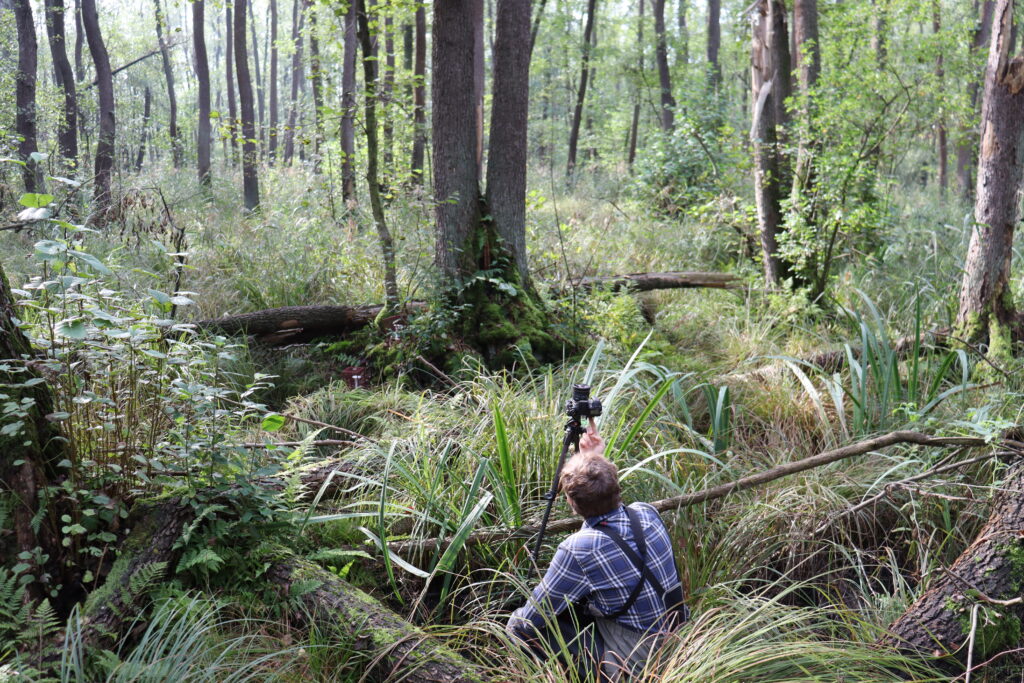
As this was our final field work this year, we will now work on preparing of educational materials, analysing the already aquired data and you can look forward to next year when we will host Conference in České Budějovice with the excursion into the Černiš. We will inform you with the more details in time, but expected date is sometime in half of May 2023.
National reserve Šúr in Slovakia – 18.08.2022
Šúr is 655ha large protected area because of historicaly unique mixture of woodlands and treeless vegetation. We also found there Urtica kioviensis but in lower abundance. It is very nice looking place with bigger hummocks a heterogeneous age of trees, but aswell as in Poland or Hungary, almost no aboveground water was present. Work in Slovakia was especially pleasant as we had nice weather and really good accomodation with social room where we could spend the evenings and play a pool. We spent there overall 3 nights and finished the work in 2 day in the field.
Second locality is in Hungary – 25.07.2022
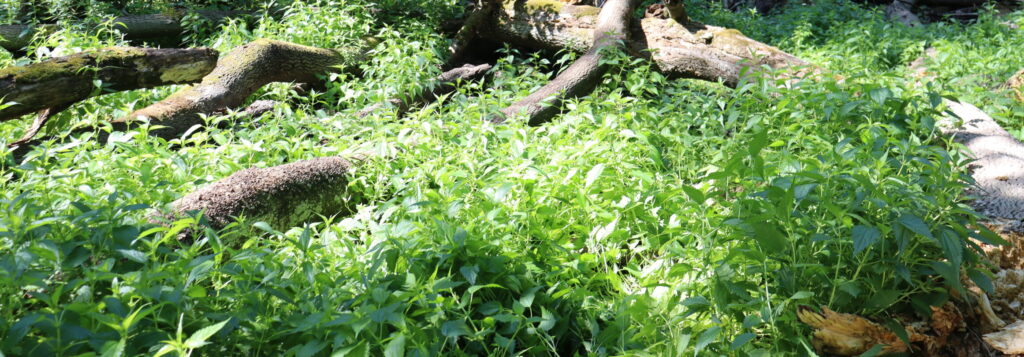
Two weeks after executing field work in Poland, our research team have visited protected area of Ócsa in Hungary. We arrived at evening 25th of july and spent first night at the Institute of botany, which has a beautiful garden with many tree and plant species with wetland section aswell, with many interesting species, for example Taxodium distichum with a big aerial roots. We met here Dr. Ferenc Horváth who was our guide and selected the suitable locality. While speaking about our project, this locality is on the opposite climate gradient and is noticeably different from the Polish one. Due to dryer conditions, Alnus glutinosa is generaly more rare in Hungary and therefore Alder carrs aswell. On our locality is A. glutinosa mixed with Fraxinus excelsior and in herb layer was dominant glowing Urtica kioviensis (image below). On the top of dryer climate, this season was very low in terms of precipitiation and vegetation was visibly suffering from the lack of water. When we were installing the water level logger, we found water 130 cm under the ground! It is normal for waterlevel in wetland forests to fluctuate during the season and in longer periods and sometimes waterlevel is belowground, but this seems like too much extreme conditions. Maybe with the ongoing climate change we can expect shift to these conditions even in the more continental areas. Therefore it is important to study these areas simultaneously.
All the tasks were done according to the plan. We found suitable hummocks and sampled them in two days. For the installment of level logger we used a hollow left by a fallen tree, which helped a lot while finding the deep water.
Field work begins in Poland – 12.07.2022
On the 12th of July we arrived to the tiny village Niezgoda where we were accommodated in hunters lodge. Nature reserve olszyny niezgodzkie and surrounding forests were almost next to the lodge so we had very easy and fast access to the studied locality. The same day we went for a walk to see possible areas for our monitoring and to see Nature reserve. We selected part of the big area forest complex next to the Nature reserve and we asked local foresters to exclude this part of the forest from any management.

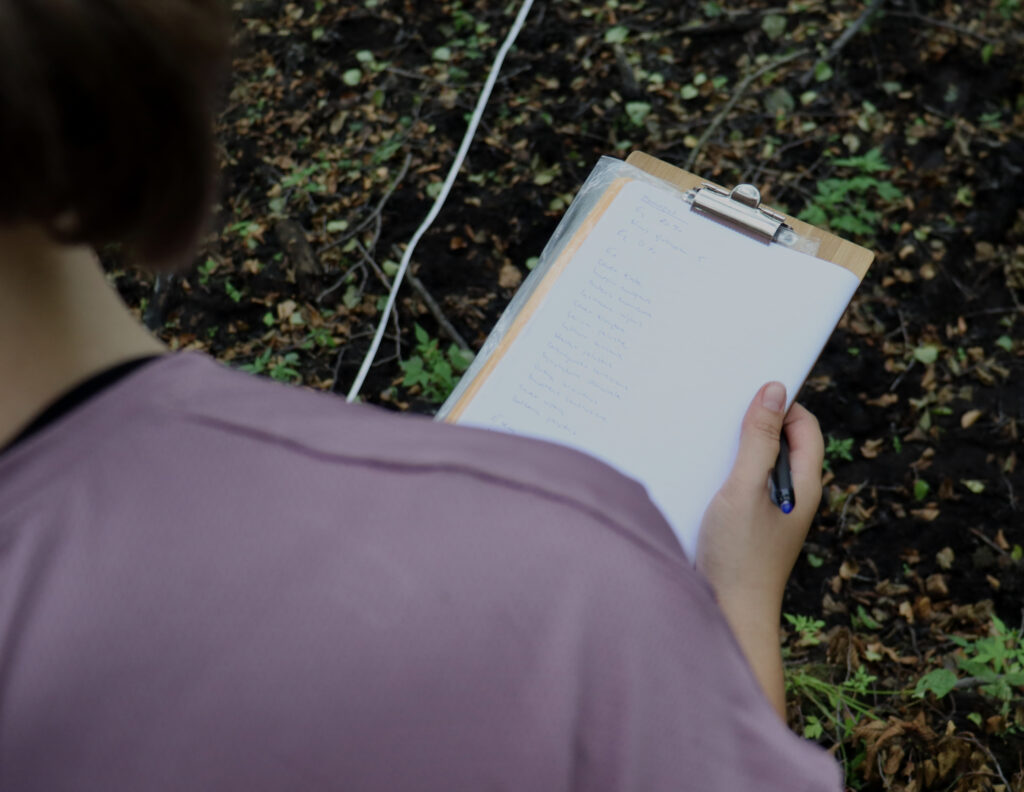
Second and third day we took our equipment to the field and started to building monitoring plots. Water level was exceptionally low, which makes our work a bit easier, but sometime soon it will be refilled with water as the fluctuation of water level is common in Alder carrs. We will monitor the water level and analyse the fluctuation through the year and also more years trend. Overall we installed 20 TMS loggers on the hummocks to measure temperature in the soil, on the surface, above the ground and also humidity in the soil. One Solinst Levelogger is installed there and it monitors water level and conductivity. we also collected many phytosociological relevés with many species like. Action ends with final meeting and 15th of July we came back to the Czech republic. It was very successful start of the project. The same methods will be applied in Hungary on the 25th of July to 28th of July in Ócsa and our monitoring network will keep growing.
Some more photos from the action can be found in our gallery section.
Project approved! – 04.05.2022
We have achieved the most important step, our project proposal was accepted in first selection tender in 2022. We are very grateful for this opportunity and we are starting necessary work immediately. In addition to administrative tasks, the NERVE4 group have to discuss detailed methodology and order measurement tools that will be placed in monitoring plots in all V4 countries!
The project is co-financed by the Governments of Czechia, Hungary, Poland and Slovakia through Visegrad Grants from International Visegrad Fund. The mission of the fund is to advance ideas for sustainable regional cooperation in Central Europe.
https://www.visegradfund.org/

Czech University of Life Sciences Prague, Faculty of Environmental Sciences, Czech Republic
Plant ecology lab is group fulfilling the project goals in the Czech Republic. Our team members have rich experience from the field of ecology and biodiversity from wetland forests and various other habitats aswell. More information can be found on this websites.
For monitoring we choose 70 ha area of alder swamp forest in protected area Vrbenské rybníky in southern Bohemia, often reffered to as alder carr Černiš.


Centre for Ecological Research, Institute of Ecology and Botany, Hungary
The Forest Ecological Research Group focuses on the investigation of species and functional composition, structure and dynamics of forests. Their expertise includes investigation of stand structure, many organism group determination (plants, animals, fungi), measuring forest site conditions (microclimate, soil conditions) and biological processes (decomposition, predation, regeneration, effect of large herbivores). The group has long-term experience with the vegetation monitoring in wetland forests.
in Hungary, the 70 ha sized Ócsa Alder Swamp Forest Reserve in Budapest region was chosen for monitoring.
University of Agriculture in Kraków, Faculty of Forestry, Poland
Laboratory of Dr. Remigiusz Pielech at Faculty of Forestry University of Agriculture in Kraków focus on understanding the functioning and diversity patterns in riparian ecosystems, the effects of large scale disturbances and browsing pressure on forests. It is also involved in collaborative analyses of temperate forest dynamics as well as patterns of diversity in Palaearctic grasslands.
in Poland, large complex (ca. 900 ha) of alder swamp forests located in the Barycz River valley near Żmigród was chosen for monitoring.
Institute of Forest Ecology, Slovak Academy of Sciences, Slovakia
Institute of Forest Ecology, Slovak Academy of Sciences focuses on the biology and ecology of organism associated with successional processes in forest ecosystems including wetland forests. The Institute also deals with problems concerning long-term changes and stress factors in forest ecosystems, in both geographic and biotaxonomic terms. Studies on the structure, productivity and stability of natural, semi-natural and culture-influenced forests also feature prominently in the Institute‘s research program, encompassing pedology, phytocoenology, phenology, mycology, ecophysiology, as well as invertebrate and vertebrate zoology.
For monitoring in Slovaki was chosen wetland forest complex in national nature reserve Šúr.
Visegrad fund
The Fund is an international donor organization, established in 2000 by the governments of the Visegrad Group countries—Czechia, Hungary, Poland and Slovakia—to promote regional cooperation in the Visegrad region (V4) as well as between the V4 region and other countries, especially in the Western Balkan and Eastern Partnership regions. The Fund does so by financing grants and awarding scholarships and artist residencies through its annual budget of €8 million annually provided by V4 governments.
The project is co-financed by the Governments of Czechia, Hungary, Poland and Slovakia through Visegrad Grants from
International Visegrad Fund. The mission of the fund is to advance ideas for sustainable regional cooperation in Central Europe.